
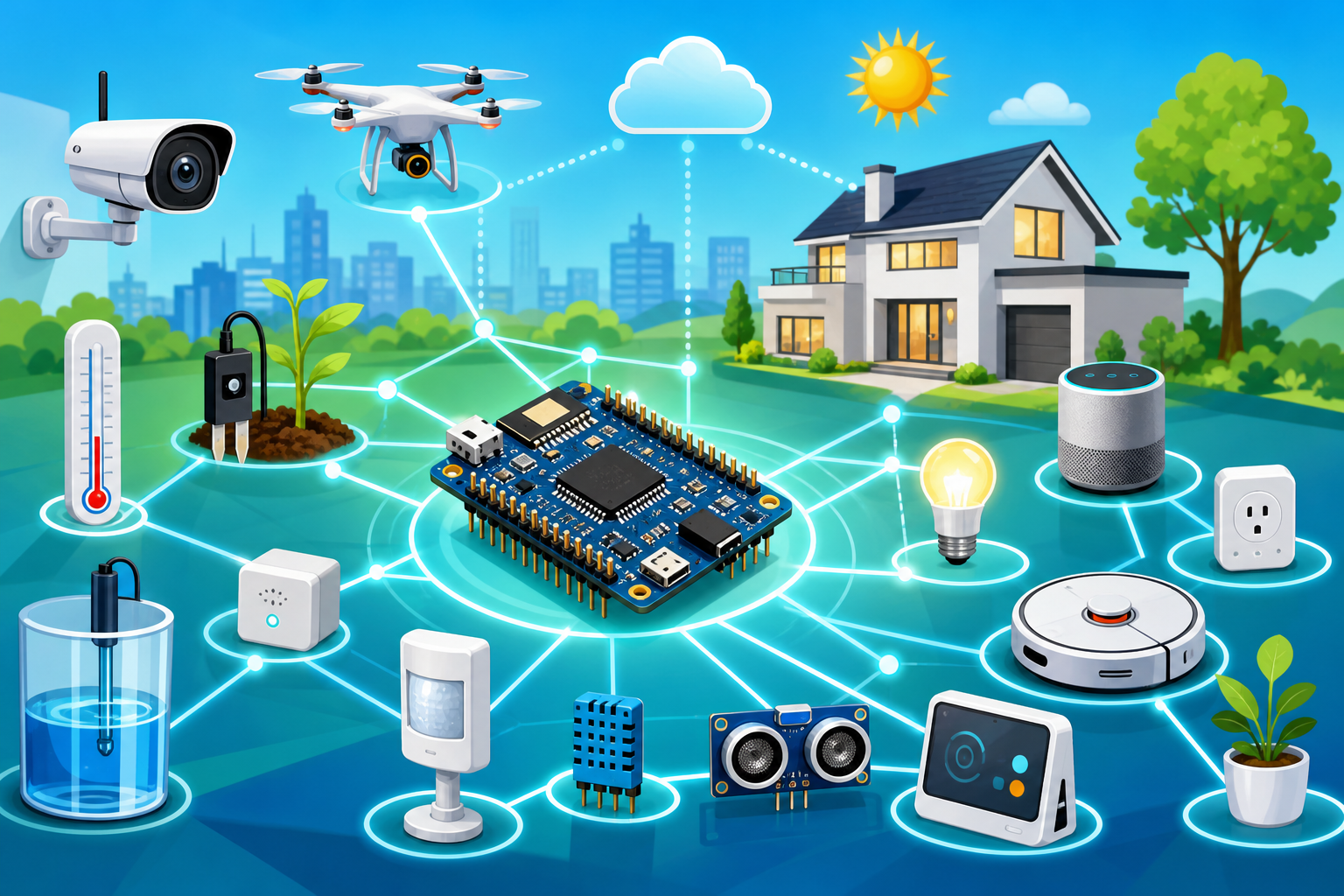
- IoT roles need sensors, MQTT, cloud ingest, dashboards, and security — not blink-LED only.
- Expect 15 core modules plus a phased real-time project with hands-on delivery.
- Python or C programming helps; networking basics complement cloud modules.
- Book Asmorix demo for IoT kit and lab details.
This IoT course syllabus covers connected devices from sensors and microcontrollers through MQTT messaging, cloud IoT platforms, edge analytics, and security — with a smart device capstone. Use before IoT Training in Chennai. Related: Python Course Syllabus, Hardware & Networking Course Syllabus, Microsoft Azure Course Syllabus.
IoT training should span electronics basics, microcontroller programming, protocols (MQTT/HTTP), cloud ingestion, dashboards, and device security — not LED blink demos alone.
Quick Overview
| Item | Details |
|---|---|
| Course focus | End-to-end IoT solution design from device to cloud dashboard |
| Modules | 15 core modules + real-time project guidance |
| Level | Beginner to intermediate IoT developer/engineer entry |
| Who it is for | ECE/EEE grads, embedded aspirants, makers, and software engineers |
| Key outcomes | Interface sensors, program boards, publish MQTT data, visualize on cloud, apply IoT security basics |
| Training options | Classroom and live online batches in Chennai with placement support |
Who Should Follow This IoT Syllabus?
Basic programming (Python or C) helps. Electronics fundamentals assist sensor modules; beginners start with kits and guided labs.
Module 1: IoT Foundations & Architecture
- IoT system layers
- Device-to-cloud architecture
- Industrial and consumer use cases
- IoT constraints
- IoT project lifecycle
- Edge versus cloud decisions
- Lab: apply this module in a guided IoT device prototype exercise
- Review common interview and on-the-job scenarios for iot foundations & architecture
Module 2: Microcontrollers & Embedded Setup
- Microcontroller fundamentals
- Arduino boards
- ESP32 capabilities
- GPIO pins
- Breadboard safety
- Embedded development tools
- Lab: apply this module in a guided IoT device prototype exercise
- Review common interview and on-the-job scenarios for microcontrollers & embedded setup
Module 3: Sensors & Data Acquisition
- Temperature sensors
- Motion sensors
- Light sensors
- Sensor calibration
- Analogue-to-digital conversion
- Sampling intervals
- Lab: apply this module in a guided IoT device prototype exercise
- Review common interview and on-the-job scenarios for sensors & data acquisition
Module 4: Actuators & Control
- Relays
- Motors
- LED indicators
- PWM signals
- Actuator safety
- Control circuits
- Lab: apply this module in a guided IoT device prototype exercise
- Review common interview and on-the-job scenarios for actuators & control
Module 5: IoT Connectivity
- Wi-Fi provisioning
- Bluetooth Low Energy
- LoRaWAN
- Cellular IoT
- Protocol selection
- Network power trade-offs
- Lab: apply this module in a guided IoT device prototype exercise
- Review common interview and on-the-job scenarios for iot connectivity
Module 6: MQTT Messaging
- MQTT topics
- Publish-subscribe messaging
- QoS levels
- Retained messages
- Broker setup
- MQTT security
- Lab: apply this module in a guided IoT device prototype exercise
- Review common interview and on-the-job scenarios for mqtt messaging
Module 7: IoT Protocols & APIs
- HTTP APIs
- CoAP concepts
- WebSockets
- Payload formats
- Device registration
- Protocol debugging
- Lab: apply this module in a guided IoT device prototype exercise
- Review common interview and on-the-job scenarios for iot protocols & apis
Module 8: Edge Computing & Gateways
- Edge computing
- Local filtering
- Offline buffering
- Gateway devices
- Edge rules
- Latency reduction
- Lab: apply this module in a guided IoT device prototype exercise
- Review common interview and on-the-job scenarios for edge computing & gateways
Module 9: IoT Cloud Platforms
- IoT cloud platforms
- Device twins
- Telemetry ingestion
- Cloud functions
- Time-series storage
- Fleet management
- Lab: apply this module in a guided IoT device prototype exercise
- Review common interview and on-the-job scenarios for iot cloud platforms
Module 10: Telemetry Data & Analytics
- Time-series databases
- Telemetry schema
- Data retention
- Stream processing
- Dashboard queries
- Alert thresholds
- Lab: apply this module in a guided IoT device prototype exercise
- Review common interview and on-the-job scenarios for telemetry data & analytics
Module 11: IoT Dashboards & Applications
- Web dashboards
- Mobile controls
- Real-time charts
- Device status views
- Notification workflows
- User experience
- Lab: apply this module in a guided IoT device prototype exercise
- Review common interview and on-the-job scenarios for iot dashboards & applications
Module 12: IoT Security
- Device identity
- Firmware signing
- TLS certificates
- Secure boot
- Network segmentation
- Threat modelling
- Lab: apply this module in a guided IoT device prototype exercise
- Review common interview and on-the-job scenarios for iot security
Module 13: Device Lifecycle Management
- Over-the-air updates
- Firmware versioning
- Remote diagnostics
- Battery monitoring
- Device logs
- Field maintenance
- Lab: apply this module in a guided IoT device prototype exercise
- Review common interview and on-the-job scenarios for device lifecycle management
Module 14: IoT Industry Solutions
- Industrial IoT
- Smart agriculture
- Home automation
- Healthcare devices
- Supply-chain tracking
- IoT ethics
- Lab: apply this module in a guided IoT device prototype exercise
- Review common interview and on-the-job scenarios for iot industry solutions
Module 15: IoT Portfolio & Interview Practice
- IoT interview labs
- Hardware project portfolio
- Architecture diagrams
- Sensor troubleshooting
- Cloud integration demo
- Career roadmap
- Lab: apply this module in a guided IoT device prototype exercise
- Review common interview and on-the-job scenarios for iot portfolio & interview practice
Module 16: Real-Time Project
Prototype an IoT cold-chain monitor that collects temperature telemetry, raises alerts, and gives logistics staff a dashboard for shipment risk.
- Sensor firmware and MQTT telemetry flow
- Cloud or local dashboard with threshold alerts
- Security, maintenance, and deployment runbook
Phase 1
- Select sensor, controller, and connectivity
- Wire and calibrate temperature hardware
- Define telemetry payload and alert limits
Phase 2
- Publish data through MQTT
- Store readings and build dashboard
- Implement temperature-breach notifications
Phase 3
- Test intermittent-network behaviour
- Document certificate and update strategy
- Demonstrate shipment monitoring scenario
How to Use This Syllabus
Confirm hardware kits, MQTT labs, and cloud trial accounts are included. Visit IoT Training in Chennai with Placement.
Related Courses & Syllabus Guides
Frequently Asked Questions
What does the IoT course syllabus cover?
It covers sensors and actuators, Arduino and Raspberry Pi platforms, embedded C and Python programming, MQTT and HTTP protocols, cloud IoT platforms, edge analytics, device security, and industrial IoT introduction.
How many modules are in this IoT syllabus?
This reference plan has 15 core modules plus a phased real-time project. Institutes may combine or split modules depending on batch duration and lab hours.
Who should follow this IoT syllabus and what prerequisites apply?
This syllabus suits embedded aspirants, ECE graduates, and developers entering connected-device roles. Python or C programming and basic electronics familiarity help but guided labs support beginners.
Are hardware kits provided for IoT training?
Quality IoT training should provide or specify Arduino and Raspberry Pi sensor kits. Confirm kit availability and lab inventory during counseling before enrolling.
What projects should be part of IoT training?
A sensor-to-dashboard smart device project with MQTT messaging, cloud ingestion, live monitoring, and documented security controls is a strong capstone.
Is this IoT syllabus suitable for beginners and career switchers?
Yes. The syllabus progresses from electronics basics to cloud-connected devices, so freshers and career switchers with mentor-led kit labs can enter IoT developer roles.
How does this IoT syllabus relate to Python, networking, or Azure training?
The Python syllabus supports Pi programming. Hardware & Networking training complements protocol and connectivity modules. Microsoft Azure training extends into cloud IoT Hub services.
Where can I join IoT training in Chennai?
Asmorix offers mentor-led IoT training with project kits and placement support. Book a free demo to match this syllabus to your lab kit and batch timing.
