Tosca Certification Training in Chennai
- Tosca Certification Training in Chennai with mentor-led practice, structured modules, and placement support for Chennai learners.
- Learn Tricentis Tosca Model-Based Testing through tools and workflows used in real teams, not slide-only theory.
- Build portfolio-ready projects you can explain clearly in technical and HR interview rounds.
- Flexible classroom and online batches with weekday and weekend options for students and professionals.
- Career mentoring included — resume reviews, mock interviews, and unlimited placement assistance while you stay active.
Let’s take the first step to becoming a skilled Tosca Automation Engineer
Book a Free DemoHands-on Skill
Practice
Career Mentorship

Course Overview
Tosca Certification Course Overview
This Tosca Certification Training path follows Tricentis model-based testing practice: scan and refine Modules, build reusable TestCases, link Requirements, drive TestData, run ExecutionLists, and rehearse certification-style questions so you can explain design choices in enterprise interviews. Our Tosca Certification Training in Chennai program combines guided practice, mentor feedback, portfolio projects, and placement support.
- Tricentis Tosca
- Modules & TestCases
- Requirements
- ExecutionLists
- 100% placement assistance support
Why Enterprise Teams Choose Tricentis Tosca
Large applications change every sprint, yet regression still has to finish before go-live. Script-heavy suites break when a label moves two pixels. Manual packs grow until nobody can finish them honestly. That is the gap Tosca Certification Training in Chennai is built to close: model-based testing with Tricentis Tosca so quality engineers can scan Modules, assemble reusable TestCases, link Requirements, drive TestData, and run ExecutionLists without rewriting brittle code for every UI tweak.
Tricentis Tosca is widely used in banking, insurance, ERP, telecom, and captive QA centres where business users and automation engineers share the same workspace. Instead of writing long scripts first, you build a living model of the application. Controls live in Modules. Business steps live in TestCases. Coverage lives in Requirements. Runs live in ExecutionLists. Data lives in TestData structures you can reuse across scenarios. When mentors teach this stack well, learners leave able to explain design choices in interviews – not only click through a demo workspace.
This overview stays in simple English. It covers how Tosca Certification Training in Chennai should feel when the goal is an enterprise QA career: scanning and refining Modules, building maintainable TestCases, tracing Requirements, shaping TestData, scheduling ExecutionLists, preparing for certification-style questions, and telling a clear story about model-based testing on a hiring call.
Model-Based Testing Without the Jargon Fog
Model-based testing means your automation mirrors the application structure, not a pile of disconnected scripts. When a login button changes, you update the Module once and every TestCase that uses that Module inherits the fix. That idea sounds simple; the craft is deciding what belongs in a Module, what belongs in a TestCase step, and what belongs in shared TestData.
In class you compare model-based testing with script-first approaches you may already know from Selenium Training in Chennai or older record-and-playback habits from QTP / UFT Training in Chennai. Selenium rewards strong coding. QTP / UFT often rewards object repositories and VBScript patterns. Tosca rewards clean Modules, readable TestCases, and Requirement coverage that audit teams can understand. Mentors do not insult other tools; they show when each style fits, then deepen Tosca practice for enterprise delivery.
Model-based habits that keep Tosca suites healthy:
- Scan Modules carefully, then rename and organise before mass reuse
- Keep business intent in TestCases, technical identification in Modules
- Link Requirements so coverage is visible, not assumed
- Centralise TestData instead of hard-coding values in every step
- Run ExecutionLists with clear naming so failures are easy to triage
- Unlimited placement assistance once you can defend your Module and TestCase design aloud
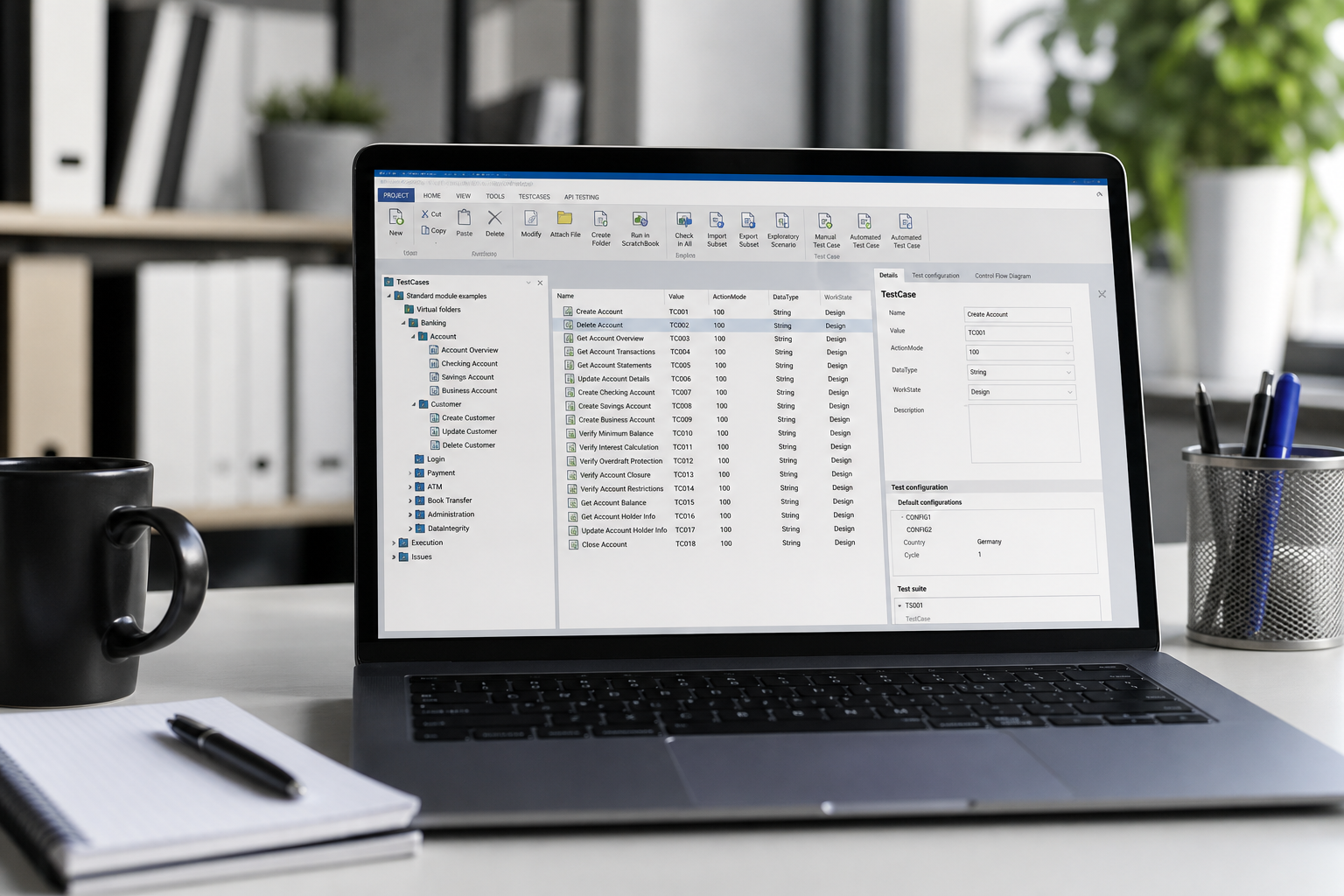
Interviewers in Chennai enterprise programs often ask why Tosca beats a fragile script for a SAP-like screen or a multi-step policy workflow. Your answer should mention reuse, faster maintenance after UI change, and Requirement traceability – then show a workspace screenshot that proves you practised it.
Modules: The Foundation of Reliable Identification
Modules store how Tosca finds and interacts with controls. A weak Module makes every TestCase look broken even when the business flow is fine. A strong Module survives small UI shifts and stays readable for the next engineer who opens the workspace months later.
During Tosca Certification Training in Chennai you practise scanning applications, reviewing property sets, tightening identification, and cleaning Module folders so names match business language. You learn when to rescan, when to adjust steering parameters, and when a Module is too broad and should be split. Mentors review whether your Modules would confuse a new joiner at 9 a.m. on a release day.
Scan and Refine Workflow
Scan the screen, verify unique properties, rename Modules for business clarity, and only then drag them into TestCases. Treat the first scan as raw material, not finished design.
Identification Discipline
Prefer stable properties over fragile ones. Document exceptions. Revisit Modules after each major UI redesign instead of patching TestCases blindly.
Folder and Naming Rules
Group Modules by application area. Use names a business analyst can recognise. Avoid cryptic abbreviations that only one author understands.
Reuse Boundaries
Share Modules across TestCases when the control is truly the same. Do not force one Module to cover unrelated screens just to keep the count low.
Certification prep questions often probe Module concepts because they separate people who clicked through a tutorial from people who maintain workspaces. Practising aloud – “I changed X property because Y was unstable” – becomes part of your interview narrative.
TestCases: Business Flows You Can Explain
TestCases describe what the user or system does. They should read like a clear checklist: open screen, enter data, verify message, move to next state. When TestCases bury technical noise, reviewers cannot tell whether a failure is product risk or automation debt.
In this program you build TestCases for login, search, form submission, approval chains, and end-to-end business journeys. You practise libraries and reusable blocks so common steps are not copied fifty times. You learn clean verification steps, recovery ideas for expected dialogs, and how to keep TestCase structure aligned with Requirement wording.
- Readable step names – a reviewer should understand intent without opening every Module
- Reusable libraries – share login and navigation without duplicating maintenance
- Clear verifications – assert business outcomes, not only that a click happened
- Controlled branching – handle optional dialogs without hiding real defects
- Traceable ownership – know which Requirement each TestCase supports
Mentors push you to demo a TestCase end to end and narrate why each step exists. That habit matters more than memorising menu paths. Enterprise QA careers reward engineers who can walk a lead through risk coverage in under five minutes.
Requirements: Coverage You Can Prove
Requirements turn automation from a private hobby into an auditable quality asset. When a release manager asks, “Did we cover policy renewal rules?”, you should open Requirements and show linked TestCases and recent ExecutionList results – not shrug and point at a folder of vaguely named tests.
Tosca Certification Training in Chennai teaches you to create Requirement structures that mirror business areas, link TestCases honestly, and spot gaps before a stakeholder meeting. You practise reporting language: what is covered, what is deferred, and what risk remains if a Requirement has no automated TestCase yet.
Requirement Hierarchy
Organise by product area and critical journey. Keep names aligned with business documents so audits stay calm.
Linking Discipline
Link only TestCases that truly prove the Requirement. Fake links destroy trust faster than missing coverage.
Gap Reviews
Schedule weekly coverage reviews. Mark manual-only items clearly so leadership knows what still depends on human checks.
Interview Storytelling
Practise explaining a Requirement gap you found and how you closed it with a new TestCase and ExecutionList run.
Many Chennai hiring panels for Tosca roles include a short scenario on coverage. Candidates who only know Modules and TestCases but cannot speak about Requirements sound incomplete for regulated programs.
TestData: Fuel for Reusable Scenarios
Hard-coded values make TestCases brittle and hard to scale. TestData lets you drive multiple business variants through the same structure: different customers, amounts, roles, product codes, and edge cases. Clean TestData design is a frequent differentiator in certification prep and in real project handovers.
You will practise creating TestData containers, mapping values into TestCase steps, separating environment-specific data from business variants, and documenting which datasets are safe for shared lab systems. Mentors warn against copying production secrets into workspaces and teach safer patterns for demo data.
TestData practices mentors expect you to defend:
- One flow, many datasets for positive and negative paths
- Clear naming so teammates know which data set belongs to which scenario
- Environment separation for SIT, UAT, and local sandboxes
- Masked or synthetic values when real customer data is not allowed
- Review notes explaining why a dataset exists and when to retire it
- Reuse of shared credentials stubs only where policy allows
When you explain TestData in an interview, connect it to business risk: how a single TestCase plus three datasets caught a fee calculation bug that a single happy-path run would have missed. That story travels better than a tool feature list.
ExecutionLists: Runs That Produce Trustworthy Signals
ExecutionLists are where planned work becomes evidence. A tidy ExecutionList with clear folders, meaningful names, and consistent run notes helps a lead decide whether a build is safe. A messy list of orphaned runs helps nobody.
In labs you assemble smoke packs, regression packs, and certification-style practice runs. You learn to read results, isolate Module versus data versus environment failures, and re-run only what is needed after a fix. You also practise communicating outcomes: which Requirements stayed green, which TestCases failed, and what the next action is.
Smoke versus Regression Packs
Keep a short smoke ExecutionList for daily confidence. Keep a wider regression list for pre-release. Do not mix them into one confusing pile.
Failure Triage Order
Check environment health first, then TestData, then Module identification, then product defect hypotheses. Guessing randomly wastes release time.
Result Communication
Summarise green, red, and blocked items in plain English for leads who will not open every log.
Repeatable Run Discipline
Document prerequisites so another engineer can execute the same ExecutionList tomorrow without asking you on chat.
Enterprise QA careers often hinge on this operational maturity. Tool familiarity gets you into the room; clean ExecutionList habits keep you trusted on release weekends.
Certification Prep That Matches Real Workspace Habits
Certification questions reward clarity on Tricentis Tosca concepts: Modules, TestCases, Requirements, TestData, ExecutionLists, and model-based testing ideas. Rote flashcards help a little; building and explaining a workspace helps more. This Tosca Certification Training in Chennai weaves exam-style drills into weekly practice so vocabulary and hands-on skill grow together.
Mentors run short oral quizzes: What lives in a Module? How do Requirements prove coverage? When do you change TestData instead of rewriting a TestCase? How would you organise an ExecutionList for a banking smoke pack? You answer with examples from your own project, then refine weak spots.
- Concept drills mapped to Modules, TestCases, Requirements, TestData, and ExecutionLists
- Timed scenario questions that mimic interview and certification pressure
- Workspace reviews that catch naming and reuse mistakes early
- Plain-English explanations you can reuse with non-technical stakeholders
- Gap lists so you know what to revise before mock interviews
- Portfolio evidence that supports both certification talk and job talk
Passing a certification is useful, but hiring managers still ask you to open a workspace and justify design. Asmorix treats certification prep as proof of understanding, not as a substitute for project skill.
Who Should Take Tosca Certification Training in Chennai
Learners arrive from many paths. Some are manual testers ready for enterprise automation without deep coding. Some already know Selenium or API checks and want a model-based tool used on large client programs. Some are graduates aiming at Tosca Test Engineer roles. Others are working professionals preparing for internal tool migrations or vendor interviews.
You are a strong fit if you are:
- A manual QA engineer moving into Tricentis Tosca on enterprise projects
- An automation engineer adding model-based testing beside scripted suites
- A graduate targeting Tosca Test Engineer or QA Analyst roles
- A professional preparing for certification-style and client interview rounds
- A career switcher who prefers structured labs over theory-only weekends
If you still need core test design, defect reporting, and STLC fundamentals, counselors may recommend a broader Software Testing Training in Chennai foundation first. If you already automate browsers, we accelerate into Modules and Requirements while keeping your prior skills as context for hybrid team conversations.
Projects Mentors Expect You to Walk Through
Projects are the evidence layer. Each build should be something you can open live and defend: Module structure, TestCase readability, Requirement links, TestData variants, and an ExecutionList result summary. Mentors prefer clean workspaces over flashy but unexplainable demos.
Example project themes shaped for enterprise interviews:
- Policy quote and bind smoke – Modules for forms, TestCases for happy path, TestData for age and sum-insured variants
- Order-to-cash mini journey – Requirements for create, approve, and invoice steps with linked automation
- User role matrix – same TestCase structure driven by TestData for admin, maker, and checker paths
- Regression pack redesign – reorganise ExecutionLists and prove faster triage after a Module fix
- Coverage gap closure – find an unlinked Requirement, add a TestCase, and show a green ExecutionList run
During reviews, mentors ask useful hard questions: Why is this control in its own Module? Which Requirement fails if this verification is removed? How would you onboard a junior tomorrow? Those answers become your placement narrative.
Enterprise QA Careers After Tosca Training
Tricentis Tosca skills open doors into Tosca Test Engineer, Automation Engineer, QA Analyst, and consultant tracks that support large delivery programs. Early roles emphasise building stable Modules and TestCases, keeping Requirements honest, and running ExecutionLists that leaders trust. Over time, strong engineers design workspace standards, coach manual testers into model-based habits, and own regression packs for critical releases.
Roles learners commonly target:
- Tosca Test Engineer
- Automation Engineer – Tricentis Tosca
- QA Analyst with model-based testing ownership
- SDET / Quality Engineer on enterprise client programs
- Test Consultant delivering Tosca frameworks for transformation projects
- QA Lead supporting Requirement coverage and release gates
Compensation talk should stay grounded and local. In Chennai’s entry and early-career enterprise QA market, many candidates who can demo Tosca workspaces and speak clearly about Modules, TestCases, and Requirements see offers that often cluster around the mid ₹3.8 LPA to ₹7 LPA range when projects and communication are solid. Stronger packages appear when you already have domain exposure in banking, insurance, or ERP, or when you can lead workspace standards. Mid-level engineers who own ExecutionList strategy, mentor juniors, and keep coverage visible frequently move higher as scope grows – sometimes into bands near ₹9 LPA and above depending on client criticality, shift expectations, and interview performance.
These bands are not promises; company type, contract model, and whether the role is product or services all move numbers. What consistently helps is a clean workspace demo, a Requirement coverage story, and calm triage of a failed ExecutionList. Placement support at Asmorix focuses on that evidence pack.
Companies That Look for Tosca and Enterprise QA Skills
Demand spreads across IT services delivery centres, banking and insurance programs, ERP and SAP-adjacent testing teams, telecom digital units, captive engineering centres, and consulting programs modernising manual packs into Tricentis Tosca. Some employers want pure Tosca specialists; others want a quality generalist who can also discuss Selenium or broader software testing. Either way, Module discipline, TestCase clarity, Requirements linking, TestData design, and ExecutionList storytelling remain common screens.
Environments where Tosca portfolios often get attention:
- IT services firms running large Tosca automation workstreams
- Banking and financial services QA programs
- Insurance policy and claims testing teams
- ERP and enterprise application quality squads
- Telecom digital and BSS/OSS related testing groups
- Healthcare and life-sciences regulated delivery programs
- Captive centres maintaining shared Tosca workspaces
- Consulting programs migrating from manual or legacy automation
- Product companies adopting model-based testing for complex UIs
- Remote-first teams hiring India-based Tosca engineers
Recruiter screens often move fast: explain model-based testing, show a Module refinement, describe a Requirement gap you closed, and narrate an ExecutionList failure you diagnosed. Practising aloud is part of the curriculum, not an afterthought before placement support starts.
Why Learners Choose Asmorix for Tosca Certification Training in Chennai
Asmorix keeps learning practical. Trainers who have delivered enterprise suites explain trade-offs instead of hiding behind tool marketing. Batches stay focused on workspaces that can be reviewed. Career counselors connect your project story to roles that actually list Tricentis Tosca, model-based testing, and enterprise QA on the job description.
- Industry-shaped syllabus covering Modules, TestCases, Requirements, TestData, and ExecutionLists
- Mentor feedback that improves identification, reuse, and coverage honesty
- Portfolio-first mindset so interviews start with a workspace demo, not a claim
- Certification-style drills woven into weekly practice
- Transparent fees – Foundation ₹8,000 / Advanced ₹35,000 / Premium ₹50,000
- Classroom and live-online options with the same outcome spine
- Unlimited placement assistance while you keep improving readiness
Visit the course hub at https://www.asmorix.com/tosca-certification-training-in-chennai/ for batch details. Related paths in Selenium, QTP / UFT, and software testing help you build a wider quality foundation when counselors recommend it.
Skills Grid You Walk Away With
By the end of this Tosca Certification Training in Chennai you should scan and refine Modules confidently, build readable TestCases, link Requirements with honest coverage, design reusable TestData, run ExecutionLists that produce clear signals, and explain model-based testing choices in certification and hiring conversations.
Technical Skills
- Tricentis Tosca workspace navigation
- Module scanning, identification, and organisation
- TestCase design with reusable libraries
- Requirements creation and TestCase linking
- TestData structures for multi-variant scenarios
- ExecutionList packing for smoke and regression
- Result triage and failure communication
- Certification-oriented concept readiness
Professional Skills
- Risk-based selection of journeys to automate
- Stakeholder updates in plain English
- Collaboration with business analysts on Requirement wording
- Release-gate thinking for enterprise go-lives
- Workspace hygiene and peer review etiquette
- Interview narration of model-based trade-offs
- Estimation of Tosca automation tasks
- Calm triage of red ExecutionList runs under time pressure
These skills travel. Even when an employer adds custom templates or governance rules on top of Tosca, the same habits – clean Modules, honest Requirements, reusable TestData, trustworthy ExecutionLists – still decide whether your automation helps the release or slows it down.
How This Path Differs from Scripted Automation Tracks
Learners sometimes ask whether they should study Tosca or stay only with code-driven tools. The honest answer depends on the jobs you want. Scripted tracks such as Selenium remain excellent for teams that live in code repositories and CI pipelines. Mobile tracks such as Appium solve device journeys. Legacy UFT / QTP skills still appear on some long-running accounts. Tosca shines when organisations want model-based testing, shared workspaces, and Requirement visibility across large business applications.
Asmorix counselors help you choose without fear marketing. Many professionals eventually learn more than one approach. Starting with Tosca Certification Training in Chennai makes sense when local job descriptions emphasise Tricentis Tosca, Modules, TestCases, and enterprise delivery. Adding Selenium or software testing fundamentals later can widen your options when a team mixes tools.
Choose Tosca when…
Job posts mention Tricentis Tosca, model-based testing, or enterprise packages where business-readable automation matters as much as code.
Keep Selenium nearby when…
Teams need custom frameworks, API-plus-UI pipelines, or open-source stacks. Cross-linking knowledge helps hybrid squads.
Respect QTP / UFT history when…
Migration projects still need engineers who can read older assets while rebuilding flows in Tosca Modules and TestCases.
Use software testing roots always
Defect clarity, risk prioritisation, and stakeholder communication remain valuable no matter which automation tool you run.
Mini FAQs Before You Enroll
Do I need strong coding skills for Tosca?
Deep coding is not the main entry barrier. You still need logical thinking, careful Module design, and clear TestCase structure. Counselors assess your background in the free demo and suggest any bridging study.
Is this only certification coaching?
No. Certification prep is included as concept drills, but the spine is hands-on Modules, TestCases, Requirements, TestData, and ExecutionLists you can demo in interviews.
I already know Selenium – will this feel repetitive?
Web automation concepts help with quality thinking, but Tosca’s model-based workspace is a different craft. Mentors accelerate past basics you already know and spend time where Tricentis Tosca differs.
What are the course fees?
Foundation is ₹8,000, Advanced is ₹35,000, and Premium is ₹50,000. Exact inclusions – mentor hours, project depth, and placement intensity – are confirmed in counseling so you pick the lane that matches your timeline.
How does placement support work?
After projects and mocks meet the readiness bar, the placement team helps with resumes, applications, and interview practice. Support stays active while you keep improving weak areas and shipping clearer workspace demos.
Can working professionals join weekend batches?
Yes, subject to the current calendar. Weekday and weekend options are offered. Confirm timings when you book a demo and ask how lab practice fits around your work hours.
Take the Next Step with Asmorix
If you want a career story built on shipping model-based testing – not only watching tool tours – this Tosca Certification Training in Chennai gives you a clear runway: Tricentis Tosca fundamentals, Modules, TestCases, Requirements, TestData, ExecutionLists, certification-style drills, interview practice, and placement support.
Review related learning in Selenium, QTP / UFT, and Software Testing if counselors recommend a wider base. Pick Foundation ₹8,000, Advanced ₹35,000, or Premium ₹50,000 with transparent guidance, then bring your workspace questions and career goals to a short conversation.
Ready to build enterprise Tosca skills that hiring managers can verify in a live demo? Book a free demo and map your Tosca learning plan with Asmorix.
100% Placement Support
From your first WebDriver script, our placement team helps you build automation proof — a GitHub framework, resume rewrites focused on Tosca and TestNG, mock technical rounds, and follow-ups aimed squarely at Automation Test Engineer and SDET openings.

Upcoming Tosca Batches For Classroom and Online
Need a different automation training slot that fits your schedule?
Request Custom TimeTry an easy and secured way of payment
- UPI Payments
- No Cost EMI
- Internet Banking
- Credit/Debit Card
Tosca Course Fee Structure
Starter Path
Foundation Level
₹12,000
₹8,000
Tosca and MBT foundations
- Core concepts and setup
- Guided starter exercises
- Tool orientation
- Mini practice task
- Trainer Q&A support
Most Popular
Advanced Level
₹45,000
₹35,000
Job-ready tosca track
- Modules and TestCases
- Requirements and execution
- Certification prep drills
- Portfolio project reviews
- Interview preparation basics
Premium
Premium Level
₹65,000
₹50,000
Tosca career mastery track
- Everything in Advanced Level
- Capstone + placement mentoring
- Advanced mock interviews
- Extended mentor support
- Priority placement mentoring
Trusted Tosca Certification Training Institute in Chennai
Google Reviews
Youtube Reviews
Facebook Reviews
Justdial Reviews
Tools Covered in Our Tosca Certification Training in Chennai
Tricentis Tosca
Modules
TestCases
Requirements
ExecutionLists
Model-Based
TestData
Cert Prep
Who Should Take a Tosca Course in Chennai
Roles You Can Target After Tosca Training
Tosca Course Syllabus
This Tosca Certification Training path follows Tricentis model-based testing practice: scan and refine Modules, build reusable TestCases, link Requirements, drive TestData, run ExecutionLists, and rehearse certification-style questions so you can explain design choices in enterprise interviews. Learners in Tosca Certification Training in Chennai also receive placement mentoring and portfolio guidance.
- 01 — Tosca & MBT OverviewWhy Tosca
- Model-based idea
- Tosca workspace
- Roles in enterprise QA
- Compare to script tools
- Certification path map
- 02 — Workspace & NavigationTool Comfort
- Repositories
- Folders
- Checkout habits
- Search and reuse
- Version thoughts
- 03 — ModulesScan & Steer
- Module creation
- Attributes
- Steering params
- XScan awareness
- Stable naming
- 04 — TestCasesBuild Flows
- Action modes
- Reusable steps
- Conditions idea
- Clean structure
- Business readability
- 05 — Requirements TraceabilityCoverage Proof
- Requirement objects
- Link to cases
- Coverage views
- Change impact
- Audit-friendly links
- 06 — TestData & TemplatesScale Suites
- TestCase templates
- Data tables
- Combinatorics idea
- Env configs
- Maintainable data
- 07 — ExecutionLists & ResultsRun & Read
- Execution lists
- Scratchbooks idea
- Logs and screenshots
- Failed step triage
- Rerun habits
- 08 — Certification PrepExam Ready
- Topic weight awareness
- Practice question style
- Common pitfalls
- Hands-on recall drills
- Study plan
- 09 — Tosca ProjectsPortfolio
- Login Module pack
- Order flow TestCases
- Requirements coverage map
- Data-driven ExecutionList
- Capstone review
- 10 — Placement PreparationCareer
- Tosca resume keywords
- MBT interview storytelling
- Module design Q&A
- Mock panels
- Placement mentoring
Build Your Automation Portfolio with Real-Time Tosca Projects
Practice the exact automation deliverables SDET panels ask about — framework code, cross-browser suites, CI pipelines, and BDD scenarios — so your GitHub shows working automation, not just tool names on a resume.
Login & Registration Automation Suite
Automate a complete signup, login, and logout flow with Tosca WebDriver — apply explicit waits, handle alerts, and validate error messages for invalid credentials.
- WebDriver actions & explicit waits
- Negative scenario coverage
Ecommerce Checkout Framework (POM)
Build a Page Object Model framework for search, add-to-cart, and checkout on a demo shopping site, keeping locators and test logic in separate reusable classes.
- Page Object Model structure
- Maven project setup
Data-Driven Regression Pack with TestNG
Use TestNG DataProvider to run the same test with multiple input sets from an Excel sheet, then generate a pass/fail report for a banking-style form.
- TestNG DataProvider & groups
- Excel-driven test data
Cucumber BDD Feature Suite
Write Gherkin feature files for a hotel booking flow and wire step definitions to Tosca WebDriver, producing readable scenarios non-technical stakeholders can review.
- Gherkin syntax & step definitions
- BDD scenario outlines
Cross-Browser Suite on Tosca Grid
Configure the same regression suite to run on Chrome, Firefox, and Edge using Tosca Grid, then compare results across browsers in one consolidated report.
- Tosca Grid configuration
- Parallel execution basics
Jenkins CI Pipeline for Automation Runs
Connect your Maven-Tosca project to a Jenkins job that triggers on a Git push, runs the full TestNG suite, and publishes results to a shared report.
- Jenkins job configuration
- Git-triggered test runs
Self-Healing Locator Experiment
Build a small utility that falls back to a secondary XPath when a primary CSS locator fails, and log which strategy succeeded — a common SDET framework talking point.
- Locator fallback strategy
- Custom logging utility
Automation Capstone: Travel Booking Framework
Combine POM, TestNG, ExtentReports, and Jenkins into one end-to-end framework for a travel booking flow, then document the architecture for your portfolio walkthrough.
- Hybrid framework architecture
- Portfolio-ready write-up
Begin Your Tosca Automation Journey in Chennai
- Automation Beginners Welcome
- Target SDET Roles at 6L+ CTC
- WebDriver & TestNG Practice Hours
- IT Services & Product Automation Openings
Flexible Learning Paths
Modes of Training for Tosca at Asmorix
Pick a format that fits your week: campus WebDriver labs, live online automation classes, or a closed corporate batch. Locators, waits, TestNG, Page Object Model, and SDET mocks remain the same no matter how you join.
Offline / Classroom Training
Bring your laptop and get immediate help when a locator breaks or a TestNG suite throws an unexpected failure during lab hours.
- Face-to-face support from SDETs who automate real releases
- Same-session fixes when a Page Object Model class misbehaves
- AC labs with Eclipse, Maven, Jenkins, and Tosca Grid ready to use
- Daily practice on locators, waits, and framework structuring
- Campus aptitude warm-ups ahead of SDET fresher drives
- In-person practice explaining your framework design clearly
- Mock interviews styled like junior automation tester screens
- Walk-in access to campus and partner hiring events
- Automation placement mentoring until applications stay consistent
Online Training
Join live automation sessions from home, share your IDE screen while writing WebDriver code, and finish framework tasks without commuting.
- Live instructor sessions — not passive recorded playlists
- Raise-hand mentoring inside every scripting block
- Same-day answers when a stale-element exception stops making sense
- Virtual mocks covering WebDriver, TestNG & HR rounds
- Shared repositories for framework review and Git practice
- Remote panels with written feedback after each mock session
- SDET placement coaching locked to your batch calendar
Corporate Training
Tailored online, classroom, or hybrid automation workshops shaped around your team’s existing test stack and regression gaps.
- Trainers who maintain automation suites on live product releases
- Team plans that stay within corporate training budgets
- Syllabus mapped to your application under test and CI pipeline
- Priority support for the full engagement window
- Upskill tracks for manual testers moving into automation
- Workshops built around your actual framework and defect data
Our Hiring Partners



Our Placement Support Overview
Tosca & Automation Testing Salary Insights in India & Chennai
Automation offers respond to how well you can defend your framework design, explain locator choices, and walk through a Jenkins pipeline — here is a practical salary map from fresher automation tester to senior SDET.
Start Here
0 – 1 Year
Fresher Automation Test Engineer
₹3.5 – 6 LPA
Typical for freshers who can write stable WebDriver scripts, explain locator strategy, structure a basic TestNG suite, and describe a Page Object Model class confidently.
Busy Hiring Band
1 – 4 Years
SDET / Automation Engineer
₹6 – 13 LPA
This band improves when you own a full framework end to end, integrate suites into Jenkins, handle cross-browser Grid runs, and reduce flaky test rates across a project.
Next Level
4+ Years
Senior SDET / Automation Architect
₹13 – 26 LPA+
Senior offers depend on framework architecture decisions, mentoring junior automation engineers, driving CI/CD quality gates, and choosing the right tool stack for a project's scale.
How Placement Assistance Works at Asmorix
Placement support begins once your Tosca fundamentals are solid enough to defend in a technical round. The process moves you forward step by step, not all at once.
- Skill readiness check: Mentor reviews your WebDriver scripts, TestNG suites, Page Object Model framework, and Jenkins setup before placement activities begin.
- Resume preparation: Counselors help you write an automation-focused resume that highlights WebDriver, Java, TestNG, framework design, and CI/CD exposure — not just a list of tool names.
- LinkedIn profile update: We guide you on headline, about section, skills, and how to appear in recruiter searches for Automation Test Engineer and SDET openings.
- Mock technical interviews: Multiple rounds covering Java basics, locator strategy, wait handling, TestNG annotations, Page Object Model design, Cucumber BDD, and Jenkins/Git questions.
- HR and communication rounds: Practice answering questions about career goals, strengths, salary expectations, and switching from manual testing with confidence.
- Placement introductions: We connect eligible learners with Chennai-based IT services companies, product firms, banking technology centers, and captive units hiring automation testers.
- Unlimited support: The placement desk remains active until you receive an offer and join. We continue following up, reviewing mock performance, and suggesting new applications.
Most Asked Tosca Interview Questions with Answers
Preparing for an Automation Test Engineer interview in Chennai or an SDET fresher drive? Practice these Tosca interview questions and answers across Java basics, WebDriver, locators & waits, TestNG, Page Object Model, Cucumber BDD, Jenkins & Git, HR rounds, aptitude, communication, group discussion, mock panels, company-specific patterns, and final success tips.
Use each answer as a starting point, then connect it to real examples from your own automation projects — scripts you wrote, a framework you built, and bugs you caught — so your answers feel grounded and not memorized.
Java Basics for Automation Interview Questions
Automation interviews often start with core Java because your WebDriver scripts and framework classes are built on it — expect questions on OOP, collections, and exception handling.
Q1. Why does Tosca automation require Java or another programming language?
Answer: Tosca WebDriver is a library, not a standalone tool — it needs a programming language to write logic, loops, conditions, and data structures around browser commands. Java is popular because of strong IDE support, TestNG/JUnit integration, and wide industry adoption, but the same WebDriver concepts apply if you use Python or C# instead.
Q2. What is the difference between an abstract class and an interface in Java?
Answer: An abstract class can have both implemented and unimplemented methods and supports single inheritance. An interface (before Java 8) could only declare method signatures and supports multiple inheritance. In automation frameworks, interfaces are commonly used to define a contract for page actions, while abstract classes hold shared setup logic like driver initialization.
Q3. What is method overloading vs overriding?
Answer: Overloading is having multiple methods with the same name but different parameters in the same class — useful for utility methods like clicking an element found by different locator types. Overriding is redefining a parent class method in a child class with the same signature — common when a specific page class needs different wait logic than the base page class.
Q4. Which Java collections do you use most in automation frameworks?
Answer: ArrayList for storing lists of WebElements or test data, HashMap for key-value test data such as username-password pairs, and List<WebElement> from findElements() when you need to loop through multiple matching elements, such as validating every link on a page.
Q5. How do you handle exceptions in a Tosca script?
Answer: Use try-catch blocks around actions likely to throw NoSuchElementException or TimeoutException, log the failure with context, and either retry the action or fail the test gracefully. Custom exceptions can also be created for framework-specific errors, like a page not loading within an expected time.
Q6. What is the difference between == and .equals() in Java?
Answer: == compares object references (memory addresses) for objects, or primitive values directly for primitives. .equals() compares the actual content of objects. For String comparison in test assertions — like comparing expected and actual page titles — always use .equals() to avoid reference-based false failures.
Q7. What are access modifiers and why do they matter in framework design?
Answer: public, private, protected, and default control which classes can access a variable or method. In Page Object Model, locators are usually private, page methods are public so tests can call them, and shared utility methods are often protected in a base class so only subclasses can use them — this keeps the framework's internals encapsulated.
Q8. What is a constructor and how is it used in Page Object classes?
Answer: A constructor initializes an object when it is created. In Page Object Model, the constructor typically accepts a WebDriver instance and initializes PageFactory elements: public LoginPage(WebDriver driver) { this.driver = driver; PageFactory.initElements(driver, this); } — this connects the page class to the browser session running the test.
Tosca WebDriver Interview Questions
WebDriver rounds test practical knowledge of browser automation, element interaction, and whether you understand how commands actually reach the browser.
Q1. What is Tosca WebDriver and how does it communicate with browsers?
Answer: WebDriver is an open-source API that automates browser actions by sending commands directly to browser-native drivers (ChromeDriver, GeckoDriver). Your Java code calls WebDriver methods, which the driver translates into real browser-level actions — clicks, typing, navigation — without needing a separate server process for local execution.
Q2. What is the difference between driver.close() and driver.quit()?
Answer: close() shuts only the current browser window/tab; if other windows are open under the same session, they stay active. quit() ends the entire WebDriver session, closing all associated windows and cleanly terminating the driver process. Always call quit() in an @AfterMethod or teardown step to avoid leaking browser processes during test runs.
Q3. How do you handle multiple browser windows or tabs in Tosca?
Answer: Use driver.getWindowHandles() to get all open window handles, then driver.switchTo().window(handle) to move control to a specific one. Store the original handle before triggering the action that opens a new window, so you can switch back to it after finishing work in the new tab.
Q4. How do you handle a JavaScript alert or popup in Tosca?
Answer: Use driver.switchTo().alert() to get the Alert object, then call .accept() to click OK, .dismiss() to click Cancel, or .getText() to read the alert message before deciding an action. Native OS-level popups (like file upload dialogs) cannot be handled this way and usually need Robot class or AutoIT instead.
Q5. How do you perform mouse hover and drag-and-drop actions in Tosca?
Answer: Use the Actions class: new Actions(driver).moveToElement(element).perform() for hover, and new Actions(driver).dragAndDrop(source, target).perform() for drag-and-drop. For complex drag interactions, build the action step by step with clickAndHold(), moveToElement(), and release() for more reliable results across browsers.
Q6. How do you take a screenshot on test failure in Tosca?
Answer: Implement TakesScreenshot: ((TakesScreenshot)driver).getScreenshotAs(OutputType.FILE), then copy the file using FileUtils.copyFile() to a results folder. Hook this into an @AfterMethod or a TestNG ITestListener's onTestFailure so screenshots capture automatically without manual steps, and attach them to your ExtentReports output.
Q7. What is the difference between findElement() and findElements()?
Answer: findElement() returns the first matching WebElement or throws NoSuchElementException if none match. findElements() returns a List<WebElement> of all matches, or an empty list if none are found — it never throws an exception for zero matches, which makes it useful for existence checks before interacting with an element.
Q8. How do you handle iframes in Tosca?
Answer: Switch context using driver.switchTo().frame() by index, name/ID, or a WebElement reference to the iframe. Elements inside the iframe are invisible to WebDriver until you switch into that frame. After finishing work inside, call driver.switchTo().defaultContent() to return control to the main page.
Locators, Waits & Synchronization Interview Questions
This is one of the most tested areas — interviewers want to see that you understand why scripts fail intermittently, not just that you can write a locator.
Q1. What are the different locator strategies in Tosca?
Answer: ID, Name, Class Name, Tag Name, Link Text, Partial Link Text, CSS Selector, and XPath. Prefer ID and CSS selectors when available for speed and stability; use XPath for complex DOM navigation or when an element has no unique attribute, since XPath can traverse parent-child relationships that CSS selectors handle less flexibly.
Q2. What is the difference between implicit wait and explicit wait?
Answer: Implicit wait sets a global polling timeout for the whole WebDriver session — every findElement() call retries up to that time before throwing an exception. Explicit wait uses WebDriverWait with a specific ExpectedCondition (like elementToBeClickable) targeted at one element. Explicit waits are preferred because they wait for exactly the right condition instead of a blanket timeout, reducing flaky failures.
Q3. What is a fluent wait and when would you use it?
Answer: FluentWait lets you define a maximum timeout plus a custom polling frequency and specific exceptions to ignore during polling. It is useful when an element takes variable time to appear and you want to check every, say, 2 seconds for up to 30 seconds while ignoring NoSuchElementException between polls, instead of the default 500ms polling in WebDriverWait.
Q4. Why should you avoid Thread.sleep() in Tosca scripts?
Answer: Thread.sleep() pauses execution for a fixed time regardless of whether the element is ready sooner or later — it either wastes time (element appears fast, script still waits) or fails (element takes longer than the fixed sleep). Explicit or fluent waits adapt to actual page behavior, which is why interviewers flag Thread.sleep() as a red flag in framework reviews.
Q5. How do you handle dynamic elements whose ID or class changes on every page load?
Answer: Use XPath functions like contains() or starts-with() to match stable partial attributes, build CSS selectors based on parent-child structure instead of the changing attribute, or locate by a nearby stable label and navigate relative to it. Avoid any locator built purely on an auto-generated numeric ID.
Q6. What is a StaleElementReferenceException and how do you fix it?
Answer: It occurs when the DOM element you previously located is no longer attached to the page — usually because the page refreshed or re-rendered that section. Fix it by re-locating the element right before interacting with it instead of reusing an old WebElement reference, or wrap the interaction in a retry block that re-finds the element on failure.
Q7. How would you write an XPath for a button with no ID or class?
Answer: Use text-based or relative XPath: //button[text()='Submit'] or //div[@id='form']//button when the button has unique visible text or a locatable ancestor. If text changes with localization, prefer a nearby stable attribute or relative position from a labeled sibling element instead.
Q8. What causes a test to be "flaky" and how do you reduce flakiness?
Answer: Common causes are unstable locators, missing or wrong wait strategy, timing-dependent assertions, and shared test data conflicts in parallel runs. Reduce flakiness with explicit waits tied to real conditions, stable locators, independent test data per test, and retry logic only as a last resort — not as a substitute for fixing the real timing issue.
TestNG Framework Interview Questions
TestNG questions check whether you can structure a real test suite, not just run individual scripts one by one.
Q1. What is TestNG and why is it preferred over plain JUnit for Tosca?
Answer: TestNG is a testing framework offering richer annotations, parallel execution, grouping, data providers, and flexible reporting compared to basic JUnit setups. It lets you organize large automation suites with dependencies between tests, prioritized execution order, and configurable retry logic — features that scale better for enterprise automation frameworks.
Q2. What are the most-used TestNG annotations?
Answer: @Test marks a test method; @BeforeMethod/@AfterMethod run before and after each test; @BeforeClass/@AfterClass run once per class; @BeforeSuite/@AfterSuite run once for the whole suite; and @DataProvider supplies multiple input sets to a single @Test method for data-driven testing.
Q3. How do you run tests in parallel using TestNG?
Answer: Configure the testng.xml suite file with parallel="methods" or parallel="classes" and a thread-count attribute. Each thread needs its own WebDriver instance — usually handled with a ThreadLocal<WebDriver> variable in the base test class — so parallel tests do not interfere with each other's browser sessions.
Q4. What is a DataProvider and how is it used for data-driven testing?
Answer: @DataProvider is a method that returns a two-dimensional Object array, where each row represents one set of test inputs. The @Test method referencing it via dataProvider="name" runs once for every row, letting you test the same login flow with multiple username/password combinations without duplicating test code.
Q5. How do you group and selectively run TestNG tests?
Answer: Tag tests with groups = {"smoke"} or groups = {"regression"} on the @Test annotation, then configure testng.xml to include or exclude specific groups when running the suite. This lets a CI pipeline run a fast smoke group on every commit while running the full regression group only on nightly builds.
Q6. How does TestNG generate reports and how do you customize them?
Answer: TestNG auto-generates a default HTML/XML report after every run in the test-output folder. For richer, stakeholder-friendly reports, teams typically integrate ExtentReports or Allure, which add screenshots, step logs, and pass/fail charts that are easier to read than the default TestNG output.
Q7. What is the difference between hard assert and soft assert in TestNG?
Answer: A hard Assert (org.testng.Assert) stops test execution immediately on the first failure. A SoftAssert collects all failures during the test and only reports them together when assertAll() is called at the end — useful when you want to validate multiple fields on a page in one run instead of stopping at the first mismatch.
Q8. How do you set retry logic for flaky tests in TestNG?
Answer: Implement the IRetryAnalyzer interface with logic to retry a failed test up to a set number of times, then attach it to test methods via @Test(retryAnalyzer = RetryAnalyzer.class) or globally through a listener. Retry logic should support genuinely flaky infrastructure issues, not hide a real locator or wait problem in the script.
Page Object Model & Framework Design Interview Questions
Framework design questions separate candidates who can write a single script from those who can build something a team can maintain for years.
Q1. What is the Page Object Model (POM) and why is it used?
Answer: POM is a design pattern where each web page is represented as a Java class containing its locators and action methods. Tests call page methods instead of writing driver.findElement() directly, so when a locator changes, you update it in one place — the page class — instead of every test file that touches that page.
Q2. What is PageFactory and how does it simplify POM?
Answer: PageFactory is a Tosca class that uses @FindBy annotations to declare locators as class fields, then PageFactory.initElements(driver, this) initializes them. It makes page classes more readable than repeated findElement() calls, though many modern frameworks skip PageFactory in favor of explicit locator methods for more wait-strategy control.
Q3. What is a hybrid framework in Tosca automation?
Answer: A hybrid framework combines multiple approaches — typically Page Object Model for structure, data-driven testing for input variation, and keyword-driven elements for readability — into one cohesive framework. Most production automation frameworks are hybrid rather than pure implementations of a single pattern.
Q4. How do you manage test data in an automation framework?
Answer: Common approaches include Excel or CSV files read with Apache POI, JSON/properties config files for environment-specific values, or a dedicated test data class. Data should live outside the test logic so you can update input values without touching script code, and so the same script can run against different environments.
Q5. What is the role of Maven in a Tosca framework?
Answer: Maven manages project dependencies (Tosca, TestNG, ExtentReports versions) through the pom.xml file, standardizes the project folder structure, and runs builds and tests through simple commands like mvn test. It also integrates cleanly with Jenkins, which can trigger a Maven build as part of a CI pipeline.
Q6. How do you design a base test class in a framework?
Answer: A BaseTest class typically holds shared setup and teardown logic: initializing the WebDriver in @BeforeMethod (reading browser type from config), and quitting it in @AfterMethod. All test classes extend BaseTest so every test automatically gets a fresh browser session without repeating setup code.
Q7. How do you organize locators to keep a framework maintainable?
Answer: Keep locators inside their respective Page Object classes, never inside test classes. Use meaningful, descriptive variable names (loginButton, not btn1), and prefer stable locator strategies (ID, data-test attributes) over fragile ones so UI changes require minimal locator updates.
Q8. How would you explain your framework architecture in an interview?
Answer: Describe the layers clearly: base classes for driver setup, Page Object classes for locators and actions, test classes for assertions, a config file for environment data, a reporting layer (ExtentReports), and a CI trigger (Jenkins). Walk through one test end to end to show how the layers connect in practice.
Cucumber BDD & Cross-Browser Testing Interview Questions
BDD and cross-browser questions test whether you can write automation that non-technical stakeholders can read and that works reliably across environments.
Q1. What is Cucumber and why do teams use BDD for testing?
Answer: Cucumber is a BDD tool that lets you write test scenarios in Gherkin — a plain-English Given/When/Then syntax — that business analysts and product owners can read and review. It bridges the gap between requirements and automated tests, since the same feature file describes both expected behavior and drives the automated script.
Q2. What is a step definition file in Cucumber?
Answer: A step definition file maps each Gherkin step (Given, When, Then) to actual Java code that performs the action — for example, mapping "When I click the login button" to a method that calls the WebDriver click on the login element. Cucumber matches the text in the feature file to the corresponding annotated method using regex or Cucumber expressions.
Q3. What is a Cucumber scenario outline and when do you use it?
Answer: Scenario Outline lets you run the same scenario steps with multiple sets of data defined in an Examples table — similar to TestNG's DataProvider but in Gherkin syntax. Use it when you want to test the same flow, like login, with several different username/password combinations without duplicating the scenario text.
Q4. How do you generate reports for Cucumber test runs?
Answer: Cucumber has a built-in plugin option in the runner class (plugin = {"pretty", "html:target/cucumber-reports"}) for basic HTML reports. For richer, stakeholder-friendly output, teams commonly integrate Cucumber with ExtentReports or the Cucumber-Masterthought reporting plugin.
Q5. What is Tosca Grid and why is it used?
Answer: Tosca Grid distributes test execution across multiple machines and browser/OS combinations from a central hub. It lets you run the same suite in parallel on Chrome, Firefox, and Edge simultaneously, cutting total execution time and catching browser-specific defects that a single-browser run would miss.
Q6. What is the difference between Tosca Grid and cloud platforms like BrowserStack?
Answer: Self-hosted Tosca Grid requires you to maintain your own nodes with installed browsers and OS versions. Cloud platforms like BrowserStack or Sauce Labs host hundreds of real browser/OS/device combinations and manage the infrastructure for you — useful when a team needs broad device coverage without maintaining physical or virtual machines.
Q7. How do you handle browser-specific failures in cross-browser testing?
Answer: Isolate the failure by re-running the exact same test on the failing browser alone, check for browser-specific CSS or JavaScript rendering differences, and confirm the driver version matches the installed browser version. Document any legitimate browser-specific behavior separately rather than forcing one workaround across all browsers.
Q8. How do tags work in Cucumber and why are they useful?
Answer: Tags like @smoke or @regression are added above a Scenario in the feature file, then the test runner can be configured to execute only scenarios matching a specific tag. This lets you run a fast @smoke suite on every commit and a full @regression suite on a nightly Jenkins job.
Jenkins, Git & CI/CD Interview Questions
CI/CD questions check that you understand how your automation fits into a team's delivery pipeline, not just how it runs on your own laptop.
Q1. What is the role of Jenkins in a Tosca automation project?
Answer: Jenkins triggers your automation suite automatically — on a schedule, after every code commit, or after a build deploy — instead of someone manually running tests. It reports pass/fail results, can email the team on failures, and keeps a history of previous runs for trend analysis.
Q2. How do you configure a Jenkins job to run a Maven-based Tosca suite?
Answer: Create a Freestyle or Pipeline job, point it to the Git repository, add a build step to run mvn test (or a specific TestNG XML suite), and configure post-build actions to publish TestNG or JUnit-format results. Pipeline jobs use a Jenkinsfile to define these steps as code, which is easier to version and review.
Q3. Why is Git important for an automation tester?
Answer: Git lets you version-control your framework, collaborate with a team without overwriting each other's changes, and roll back a bad commit safely. Automation testers use it daily to push framework updates, review changes through pull requests, and keep a full history of how the test suite evolved.
Q4. What is the difference between git merge and git rebase?
Answer: git merge combines two branches and creates a new merge commit, preserving the full history of both branches. git rebase replays your branch's commits on top of the target branch, creating a linear history without a merge commit. Teams often prefer rebase for feature branches to keep automation framework history clean before merging.
Q5. How do you resolve a merge conflict in your framework code?
Answer: Open the conflicting file, review the conflict markers (<<<<<<<, =======, >>>>>>>), decide which changes to keep or combine manually, remove the markers, then stage and commit the resolved file. For framework code, always re-run the affected tests after resolving a conflict to confirm nothing broke.
Q6. What is a CI/CD pipeline and where does automation testing fit in?
Answer: A CI/CD pipeline automates build, test, and deployment steps triggered by code changes. Automation testing usually fits as a quality gate after the build stage — if the automated suite fails, the pipeline can block deployment to production, catching regressions before they reach users.
Q7. How do you handle environment-specific configuration in a CI pipeline?
Answer: Store environment values (base URL, browser type, credentials) in config files or environment variables rather than hardcoding them, and pass the target environment as a Jenkins build parameter. This lets the same automation suite run against QA, staging, or production-like environments without code changes.
Q8. How would you debug a test that fails only in Jenkins but passes locally?
Answer: Check for headless-mode differences (Jenkins often runs headless Chrome), different browser/driver versions, missing environment variables, or timing differences due to CI machine speed. Add explicit waits instead of relying on local machine timing, and capture screenshots/logs from the Jenkins run to compare against local behavior.
HR Interview Questions for Automation Roles
HR rounds for automation roles assess your motivation, how you handle disagreements over test failures, and whether you can explain your learning journey clearly.
Q1. Why do you want to work in automation testing?
Answer: Focus on genuine reasons: enjoying the problem-solving of designing a stable framework, satisfaction from catching a regression before release, and interest in combining coding with quality ownership. Mention a specific aspect that drew you in — like building your first Page Object Model class — to show real interest, not a generic answer.
Q2. How do you handle it when a developer says your automated test result is wrong?
Answer: Stay professional and evidence-driven. Re-run the test, check the screenshot and logs, confirm the locator and wait strategy are correct, and reproduce manually if needed. If the automation was correct, share the evidence calmly; if you find a script bug, acknowledge it and fix it. The goal is accuracy, not winning the disagreement.
Q3. Tell me about yourself as an automation testing learner.
Answer: Share your background, the Tosca training you completed, what you focused on (WebDriver, TestNG, framework design), one project you built and what it automated, and the role you are targeting. Keep it under two minutes and end with why this company interests you.
Q4. What is your approach when a suite has too many flaky tests to fix before a deadline?
Answer: Prioritize fixing flaky tests in core, high-traffic flows first, temporarily quarantine (skip and flag) the lowest-impact flaky tests with a tracked ticket, and communicate clearly to the team which parts of the suite are reliable versus which need attention — rather than hiding the issue.
Q5. Where do you see yourself in 3 years in an automation career?
Answer: A realistic and motivated answer: growing from an automation tester maintaining an existing framework into an SDET who designs new frameworks, later mentoring juniors, contributing to CI/CD pipeline decisions, and possibly expanding into API or performance automation.
Q6. What is your biggest strength as an automation tester?
Answer: Pick a strength directly relevant to automation — patience while debugging a flaky locator, structured thinking when designing a framework, or attention to detail when reviewing test data. Back it with a specific example from your training projects.
Aptitude Interview Questions
Aptitude filters often appear before technical rounds for fresher automation roles at IT services companies — practice speed and accuracy, not just correct answers.
Q1. A test suite has 150 tests. 80% pass on the first run. How many failed?
Answer: 80% of 150 = 120 passed, so 150 − 120 = 30 failed. Practice the mental shortcut: 10% of 150 = 15, so 80% = 120.
Q2. A regression run takes 45 minutes. Parallel execution across 3 machines reduces it by how much (assuming perfect distribution)?
Answer: Roughly to 15 minutes (45 ÷ 3), assuming tests distribute evenly and no shared bottleneck exists. In practice, some overhead remains, but the calculation logic tests basic proportional division reasoning.
Q3. Find the missing number: 3, 9, 27, 81, ?
Answer: 243. Each term multiplies by 3 (a geometric sequence). Spotting the multiplication pattern quickly, rather than checking differences, is the key skill in this type of question.
Q4. How do you prepare for aptitude rounds in automation hiring?
Answer: Drill percentages, ratios, averages, series patterns, and time-and-work problems with a timer. Review every wrong answer to find the shortcut you missed rather than only re-reading the correct answer. Timed practice conditions you for actual test pace.
Q5. Why do companies test aptitude for automation testing roles?
Answer: Aptitude scores signal logical reasoning speed and pattern recognition — qualities relevant to debugging failing scripts, spotting patterns in flaky test failures, and designing efficient data-driven test cases. Companies use it as an early filter before technical rounds.
Communication Interview Questions
Automation testers communicate framework decisions to developers, coverage status to managers, and failure reports to stakeholders — clear communication is part of the job every day.
Q1. How do you explain a failing automated test to a developer who says the feature works fine?
Answer: Share the exact failure screenshot, the test steps, and the specific assertion that failed. Reproduce it live together if possible. Frame it as a joint investigation: "Here is what the automated run captured — can we check if this happens in your environment too?" This keeps the tone collaborative and evidence-based.
Q2. How do you give an automation status update to a project manager?
Answer: Be concise: how many tests are automated, how many pass consistently, how many are flaky and being fixed, and what risk exists if the suite cannot run before release. Use impact language, such as "checkout regression suite is green; two flaky tests in the payment flow are being stabilized."
Q3. How do you handle unclear requirements before automating a test scenario?
Answer: Raise clarifying questions in writing about expected behavior for edge cases, error states, and acceptance criteria before writing the automation script. This avoids rework and ensures your automated assertions actually check what the feature is supposed to do.
Q4. How do you present your automation project during a technical interview?
Answer: Structure it as: what application you automated, your framework architecture (POM, TestNG, Maven), how many test cases you automated, one interesting bug you caught, and how you integrated it with Jenkins. Keep it to two minutes and invite follow-up questions.
Q5. What do you do when a teammate cannot understand your framework code?
Answer: Improve the code rather than just explaining it verbally — add clearer method names, a README with setup steps, and inline comments only where logic is genuinely non-obvious. A well-structured framework should require minimal verbal explanation for another automation engineer to navigate.
Group Discussion Interview Questions
GD topics for automation roles often cover automation vs manual testing, AI in test automation, and Agile QA discussions — prepare structured points with examples, not just opinions.
Q1. How should you open a group discussion?
Answer: Define the topic in one clear sentence, state your position in one sentence, and invite others with a phrase like "I'd like to hear other views too." Opening well earns credit without dominating the discussion.
Q2. Should every test case be automated?
Answer: No. Automate stable, repetitive, high-value regression cases where the ROI on maintenance is clear. Leave exploratory testing, usability checks, and rapidly changing features to manual testing, since automating an unstable flow creates more maintenance burden than value.
Q3. How is AI changing test automation?
Answer: AI tools can suggest more stable locators, self-heal broken selectors, generate test cases from requirements, and flag likely-flaky tests. However, deciding what to automate, interpreting business context, and designing meaningful edge cases still needs human automation engineers — AI changes how we automate, not whether skilled testers are needed.
Q4. What if someone interrupts your point in a GD?
Answer: Pause, let them finish, then continue calmly: "Building on that point…" Do not raise your voice. Evaluators reward composure and active listening as much as the quality of points made.
Q5. How do you close a group discussion effectively?
Answer: Summarize the two or three key points the group agreed on, acknowledge the strongest opposing view, and offer a balanced conclusion. Avoid forcing a winner — a respectful close shows maturity to evaluators.
Mock Interview Questions
Mock rounds build the habit of connecting your Tosca knowledge to real project examples — interviewers test whether you can explain your thinking, not just recall definitions.
Q1. Walk me through your best automation project.
Answer: Cover: what application you automated, your framework structure (POM, TestNG, Maven), the trickiest bug or flaky test you fixed, how you integrated it with Jenkins, and what you would improve looking back. Aim for two minutes at a natural pace, not a rehearsed script.
Q2. How do you approach automating a feature you have never tested before?
Answer: Read the requirements and identify the happy path first, then list edge cases and error conditions. Check if a Page Object already exists for that page; if not, plan its structure. Confirm locator stability before writing the full script, then add assertions last.
Q3. What if you do not know the answer to a technical question in a mock?
Answer: Say what you do know about the topic, explain how you would find the answer (Tosca documentation, a quick test script, or asking a senior SDET), and ask a clarifying question if it helps show your thought process. Honesty combined with a clear learning path beats a confident wrong answer.
Q4. Which topics should you revise the night before a mock interview?
Answer: Locator strategy and XPath practice, implicit vs explicit vs fluent waits, TestNG annotations, Page Object Model structure, one Jenkins pipeline explanation, and a full walkthrough of your strongest framework project. Depth on these core areas beats surface knowledge on everything.
Q5. How do you demonstrate automation instinct rather than just tool knowledge?
Answer: When given a feature to automate, ask questions first — "is this element dynamic?", "what happens if the API response is slow?", "should this be part of the smoke suite or regression suite?" Asking the right questions before scripting shows the thinking that separates strong SDETs from script-writers.
Company-Specific Interview Questions
Automation interviews vary by company type — IT services firms focus on Tosca and TestNG fundamentals, while product companies test framework design and CI/CD depth more thoroughly.
Q1. What do IT services companies typically ask in automation interviews?
Answer: Services companies like TCS, Cognizant, and Infosys usually start with WebDriver basics, locator strategy, and TestNG annotations, then ask a simple framework design question. Demonstrate structured communication and clean code habits — services teams value process adherence and reliability as much as raw depth.
Q2. What do product companies focus on in automation hiring?
Answer: Product companies go deeper into framework architecture decisions, CI/CD integration, parallel execution strategy, and handling flaky tests at scale. Expect questions like "How would you design a framework for a large e-commerce site with hundreds of pages?" — these test system thinking, not just tool knowledge.
Q3. What question might appear in an automation interview at a banking technology firm?
Answer: Expect questions on securely handling test data (never hardcoding real credentials), validating transaction flows across multiple screens, and integrating automation with strict change-approval CI pipelines. Banking QA values audit trails and repeatable, well-documented test runs.
Q4. How do you prepare for a specific company's automation interview?
Answer: Read the job description and map each tool mentioned (Tosca, TestNG, Cucumber, Jenkins) to something you have practiced. Check Glassdoor or AmbitionBox for interview experience posts. Research the company's product to think through what you would automate, then rehearse explaining your approach out loud.
Q5. What framework design question is common in SDET interviews?
Answer: "How would you design a Tosca framework from scratch for a new project?" or "How would you handle test data for 50 different test scenarios?" For both, explain your reasoning aloud — layers, tools, and trade-offs — before jumping to a final answer; interviewers value structured thinking over a memorized template.
Final Interview Success Tips
Q1. What should your automation portfolio include before applying?
Answer: A GitHub repository with a complete Page Object Model framework (Tosca, TestNG, Maven), a Cucumber BDD feature suite, a Jenkins pipeline screenshot or Jenkinsfile, an ExtentReports output sample, and a clear README explaining setup and how to run the suite.
Q2. What are the must-know topics before any Tosca interview?
Answer: Locator strategy and XPath, implicit vs explicit vs fluent waits, TestNG annotations and data providers, Page Object Model structure, basic Cucumber BDD syntax, Jenkins/Git basics, and one full project walkthrough end to end. Depth on these core areas beats surface coverage of every tool ever invented.
Q3. How do you answer without sounding like you memorized from a book?
Answer: Connect every answer to your own project: "In my ecommerce framework, I used FluentWait for the product list because items loaded asynchronously — here is what happened before I fixed it." One specific example per answer turns a textbook definition into a credible response.
Q4. What if you are asked to write a WebDriver script on a whiteboard or shared document?
Answer: Think aloud: state the action you are automating, write the locator strategy first, add the wait condition, then the action, then the assertion. Interviewers score your thought process — a structured incomplete script is better than a silent wait for the perfect answer.
Q5. Last tip before walking into a Tosca interview?
Answer: Review your strongest framework project once (not just theory), keep answers short and example-based, and prepare one thoughtful question to ask at the end — like "How does your team decide what to automate versus test manually?" Asking a good question signals genuine interest in how their team works.
Ready to prepare with automation mentors? Book a free demo for a personalized Tosca interview-prep plan from Asmorix Technologies.
Building an Automation Portfolio That Gets Noticed
Recruiters want to see real automation work — not just a list of tools. Your portfolio should contain deliverables that prove you can design, build, and maintain a working framework at a professional level.
What to include in your Tosca portfolio
- GitHub framework repository: A complete Page Object Model framework built with Tosca WebDriver, TestNG, and Maven, covering at least one full user journey like login-to-checkout.
- TestNG execution reports: Sample HTML reports showing a suite run with passed, failed, and skipped tests, plus grouping (smoke vs regression) configured in your testng.xml.
- Cucumber BDD feature suite: A small set of Gherkin feature files with step definitions automating one workflow, written so a non-technical reviewer could read the scenarios.
- Jenkins pipeline evidence: A Jenkinsfile or screenshots showing your suite triggered from Jenkins, with build history and published test results.
- ExtentReports report: A generated report with screenshots on failure, step-by-step logs, and a pass/fail summary chart for one of your test runs.
- README documentation: Clear setup instructions, tools used, and a short explanation of your framework architecture — written the way you would explain it in an interview.
How to present your portfolio in interviews
Prepare a 2-minute walkthrough for each project. Explain what you automated, why you chose your framework structure, one bug or flaky test you fixed, and how you connected it to Jenkins. Recruiters respond to clear storytelling about decisions far more than to screenshots alone.
Tosca Interview Tips That Actually Help
- Know your framework cold. Interviewers will ask you to explain your Page Object Model structure. Know why each class exists and what happens when a locator changes.
- Prepare one debugging story. Pick one flaky test or failing script you fixed during training — describe how you identified the root cause, what you changed, and what you learned. This story makes your experience feel real.
- Practice locator and XPath questions out loud. Many technical rounds include: write an XPath for this element, or explain why this locator might break. Practice on any real website using browser developer tools before your interview.
- Understand why, not just how. When answering questions about waits or TestNG annotations, always connect the answer to why it matters — what problem does it solve? Interviewers prefer depth over memorized definitions.
- Ask one thoughtful question at the end. Questions like "How does your team decide what to automate first?" or "What does your CI pipeline look like?" show genuine interest and professional maturity.
- Be honest about your experience level. Freshers who are honest about what they have learned but confident about their WebDriver and TestNG fundamentals make a better impression than those who overstate experience and cannot back it up.
Full Interview Preparation for Tosca and Automation Testing Roles
Company-Specific Preparation
Before any automation interview, spend 30 minutes on the company's product. Ask yourself: what are the core user flows? Which ones are worth automating? How would you structure a framework for their login and checkout pages? Bringing this thinking into the interview shows you are already thinking like an SDET on their team.
Check the company's Glassdoor or AmbitionBox page for interview experience posts. Automation interviews at large IT services firms often start with WebDriver and TestNG basics, then move to a framework design question. Product companies tend to focus more on CI/CD integration, parallel execution, and handling flaky tests at scale.
Before the Interview
- Review the job description and map each tool mentioned to something you have practiced.
- Run your framework once to confirm it still passes on the current browser version.
- Re-read your GitHub README and be ready to explain every architectural decision.
- Prepare your introduction: name, academic background, why automation testing, what you trained on, and what you have built.
- Check your internet and camera (for online interviews) the evening before.
During the Interview
- Listen to the full question before answering. Rushing an answer that misses the point hurts more than a brief pause.
- Use automation language naturally — locator, explicit wait, Page Object, data-driven, CI pipeline — without sounding like you are reciting a glossary.
- If asked to write a WebDriver script or XPath, think aloud. Interviewers want to see your reasoning, not just the final answer.
- Keep answers concise. After explaining a point clearly, stop and let the interviewer ask a follow-up if they want more depth.
Final Tips Before Applying
- Apply consistently — automation roles require volume in applications before interview calls increase.
- Update Naukri and LinkedIn with automation-specific keywords: Tosca WebDriver, Java, TestNG, Page Object Model, Cucumber, Jenkins, Git, Maven.
- After each interview, write down the questions you were asked. Review them and improve your answers for next time.
- Keep your placement counselor updated on every interview outcome so they can adjust your preparation and target the right companies.
Student Feedback on Our Tosca Course in Chennai
I was a manual tester for three years before joining Tosca Training in Chennai at Asmorix. The trainer made me write plain Java first, then moved to WebDriver so the syntax never felt scary. Debugging a NoSuchElementException live in class taught me more than any recorded video ever did. My Page Object Model project became the centerpiece of my automation interviews.
Aravind Kumar
Manual Tester → Automation Test Engineer
Coming from a non-IT background, I thought automation testing needed a computer science degree. Asmorix proved otherwise. We built a TestNG suite step by step, and the mentor corrected my locator choices in real time instead of just handing me the answer. The placement team helped me push my framework to GitHub with a proper README before interviews started.
Nithya Raman
Non-IT Graduate · Placed as SDET Trainee
The mock interviews at Asmorix asked me to explain explicit versus implicit waits and defend my Page Object Model design on the spot — exactly what happened in my actual SDET interview two weeks later. The trainer also reviewed my Jenkins pipeline setup line by line. This felt like Tosca training with real automation depth, not a locator crash course.
Sanjay Prabhu
Fresher · Placed as SDET
Weekend batches at Asmorix fit around my BPO shift perfectly. What stood out was how the trainer treated every automation script like production code — proper naming, no hardcoded waits, clean Git commits. I automated a full checkout flow by week six and used that exact repository during my Automation Test Engineer interview.
Revathi Chandran
BPO Executive → Tosca Engineer
I had tried YouTube tutorials for months and could copy scripts but not explain them. At Asmorix, the mentor asked "why" after every line I wrote — why this locator, why this wait, why this assertion. That habit changed how I think about automation. Cucumber BDD sessions also helped me write feature files recruiters could actually understand.
Karthik Selvam
Self-Taught Learner · Placed as Automation Tester
I switched from a support engineer role after eight years, worried I was too "non-technical" for automation. The pace at Asmorix was patient in the first two weeks, then picked up fast once Java fundamentals were solid. My capstone framework combined TestNG, Maven, and ExtentReports, and I could speak about every design decision in interviews without hesitation.
Meena Sundaram
Support Engineer → Test Automation Analyst
Final-year placement drives ask surprisingly deep Tosca questions now, not just "what is a locator." Asmorix prepared me for that with framework design rounds and a live coding round simulation. I got an offer as a Junior SDET before graduation, and my batchmates still message the trainer with framework doubts months later.
Dinesh Bharathi
Final-Year Student · Placed as Junior SDET
Curious about Tosca batches? Ask for a call
A counselor will explain fees, WebDriver labs, framework sessions, and automation placement next steps.
How Asmorix Differs from Other Training Institutes
| Feature | Asmorix Technologies | Other Institutes |
|---|---|---|
| Affordable Fees | +Foundation, Advanced, and Premium plans explained before you enroll | -Unclear inclusions or surprise add-on charges |
| Industry Experts | +Mentors teach practical Tosca workflows recruiters expect and review your builds | -Slide-heavy classes with little hands-on feedback |
| Updated Syllabus | +Curriculum covers Tricentis Tosca, Modules, TestCases, Requirements aligned to Tosca Automation Engineer hiring needs | -Outdated lessons that skip portfolio proof and interviews |
| Hands-on Projects | +Guided Tosca portfolio work with mentor review before interviews | -Copied sample tasks without individual feedback |
| Certification | +Course certificate backed by tosca project proof you can explain | -Certificate without strong project evidence |
| Placement Support | +Resume, LinkedIn, mock interviews, and interview scheduling support | -Generic career tips after class ends |
| Batch Size | +Small batches for personalized mentor feedback | -Crowded sessions with limited doubt clearing |
Tosca Course FAQs
Browse by topic
1. What is Tosca Certification Training in Chennai?
Tosca Certification Training in Chennai covers Tricentis Tosca, model-based testing, Modules, TestCases, Requirements, ExecutionLists, TestData, certification prep, and Tosca portfolio work.
At Asmorix, practice comes first: portfolio work, mentor feedback, and interview-ready explanations.
2. What will I learn in this course?
You learn Tricentis Tosca, Modules, TestCases, Requirements, ExecutionLists, Model-Based Testing, TestData, and certification prep.
The goal is hire-ready skill: design checks, debug calmly, and present a clear demo.
3. Does training include hands-on projects?
Yes. Projects are central so you can show runnable evidence in interviews — not only certificates.
Mentors review structure and how clearly you narrate problem and outcome.
4. Is this skill still in demand?
Yes. Enterprise and product teams hire when candidates prove real suites, scripts, or performance findings.
Demand favors people who can explain tools and risk clearly.
5. How is this different from Selenium or other tools?
Tosca focuses on model-based enterprise automation. QTP/UFT is script-and-object-repository oriented; Selenium/Playwright are code-first browser tools.
Match the job description: enterprise MBT, legacy UFT, or performance volume.
6. Which tools are covered in Tosca Certification Training in Chennai?
Core coverage includes Tricentis Tosca, Modules, TestCases, Requirements, ExecutionLists, Model-Based Testing, TestData, and certification prep.
Tools are taught inside release-style workflows.
7. Do you offer classroom and online classes in Chennai?
Yes. Classroom and live online batches follow the same curriculum depth and placement mentoring.
Compare slots via a free demo.
1. Who can join Tosca Certification Training in Chennai?
Manual testers moving to Tosca, enterprise automation seekers, certification candidates, and working QA professionals can join based on schedule and goals.
Counselors help map your background to the right plan.
2. Do I need prior coding knowledge?
Basic computer comfort helps. Tosca is more model-driven; QTP needs VBScript basics; LoadRunner needs scripting patience for VuGen.
Daily practice matters more than a computer-science degree.
3. Can manual testers join?
Yes. Manual testers often succeed because they understand scenarios and defects.
We help translate cases into tool-specific evidence.
4. Is this suitable for working professionals?
Yes. Weekend and live online options help professionals upskill.
Bring your available hours for a realistic pace.
5. What qualification is required?
No strict degree barrier. Students, diploma holders, graduates, and postgraduates enroll.
Portfolio proof and interview clarity usually weigh more than the degree title.
6. Can final-year students join?
Yes. Many join early so projects and mocks are ready for drives.
Align batch timing with exams.
7. Is this good for career changers?
Yes, when you finish demo-ready work and can explain it in interviews.
Book free counseling before you enroll.
1. Does Asmorix provide placement support?
Yes. Resume building, LinkedIn guidance, mock interviews, and interview coordination while you stay active.
Outcomes improve when you complete projects and apply mentor feedback.
2. What job roles can I apply for after Tosca Certification Training in Chennai?
Common targets include Tosca Automation Engineer, Tosca Test Engineer, Model-Based Test Analyst, QA Automation Engineer, and enterprise QA roles.
Counselors help shortlist roles matching your project strength.
3. How does the placement process work?
After modules and projects, readiness review, resume polish, mocks, and openings where available.
Unlimited assistance continues while you stay engaged.
4. Will I get interview preparation?
Yes. Tool-specific scenarios plus HR communication.
Mocks simulate panels under time pressure.
5. Does Asmorix help with resume and LinkedIn?
Yes. ATS-friendly bullets and LinkedIn guidance with natural keywords.
Point to portfolio demos whenever possible.
6. Is placement support available for freshers?
Yes. Focus on portfolio proof and realistic first-role targets.
Consistent practice matters more than lecture hours alone.
7. Do you guarantee a job?
No ethical institute can honestly guarantee a job. We provide structured placement assistance.
Ask admissions how support works for your batch.
1. Will I get a certificate after Tosca Certification Training in Chennai?
Yes. On successful completion, you receive an Asmorix course completion certificate for Tosca Certification Training in Chennai.
Keep digital copies ready for applications.
2. Is the certificate useful for job applications?
It helps signal structured learning. Recruiters still prioritize projects and interview clarity.
Pair it with portfolio links.
3. Can I add the certificate to LinkedIn?
Yes. Add it under Licenses & Certifications.
Update your headline with natural keywords — without stuffing.
4. Do you provide project or internship certificates?
Depending on plan and eligibility, as communicated for that batch.
Ask admissions which documents apply.
5. When will I receive my certificate?
After you meet completion criteria; timelines shared after final review.
Inform counselors early if you need it for an interview.
6. Is certification enough to get hired?
No. Hire-ready status also requires finished work and interview confidence.
Advanced and Premium tracks emphasize portfolio and mocks.
7. Can employers verify my certificate?
Employers may contact Asmorix or follow verification steps shared with documents.
Be ready to walk through your project in interviews.
1. What is the fee for Tosca Certification Training in Chennai?
Current fee plans are Foundation ₹8,000, Advanced ₹35,000, and Premium ₹50,000. Confirm live offers with admissions.
Always get a written quote for your batch.
2. What is included in the course fee?
Instructor-led training, lab practice, project mentoring, and placement-oriented support by plan.
Ask for a written inclusions list.
3. Are installment or EMI options available?
Yes. UPI, cards, net banking, and no-cost EMI where available through partners.
Admissions can share the current breakup.
4. Are there any hidden charges?
Fees are plan-wise. Optional add-ons should be disclosed before payment.
Request a clear fee quote in writing.
5. Which plan should I choose?
Foundation for starters, Advanced for job-ready projects, Premium for extended mentoring and deeper placement mentoring.
A free demo helps match plan to your timeline.
6. Is the fee worth it for freshers?
It is worth it when you complete projects, attend mocks, and use placement support actively.
Compare mentor access and honest placement process — not only price.
7. How can I enroll?
Book a free demo or talk to a counselor.
Bring your background and available hours.
Courses to Explore Alongside Tosca Training
Software Testing Training
Reviews
Java Training
Reviews
API Testing Training
Reviews
Python Training
Reviews
DevOps with GenAI Training
Reviews
Dot Net Course
Reviews
PHP Course
Reviews
Tosca Course
Reviews
RPA Training
Reviews
Full Stack Development
Reviews